
If you are planning a paver patio in St. Johns County, you picked a good place to build one. The outdoor season runs nearly year-round here, and most neighborhoods from Julington Creek down to RiverTown were laid out with backyard living in mind. The catch: a patio that looks great in a catalog still has to survive sandy soil, summer downpours, and often an HOA review. Here are the design ideas we install most, plus the local details that make them last.
Patterns That Set the Tone
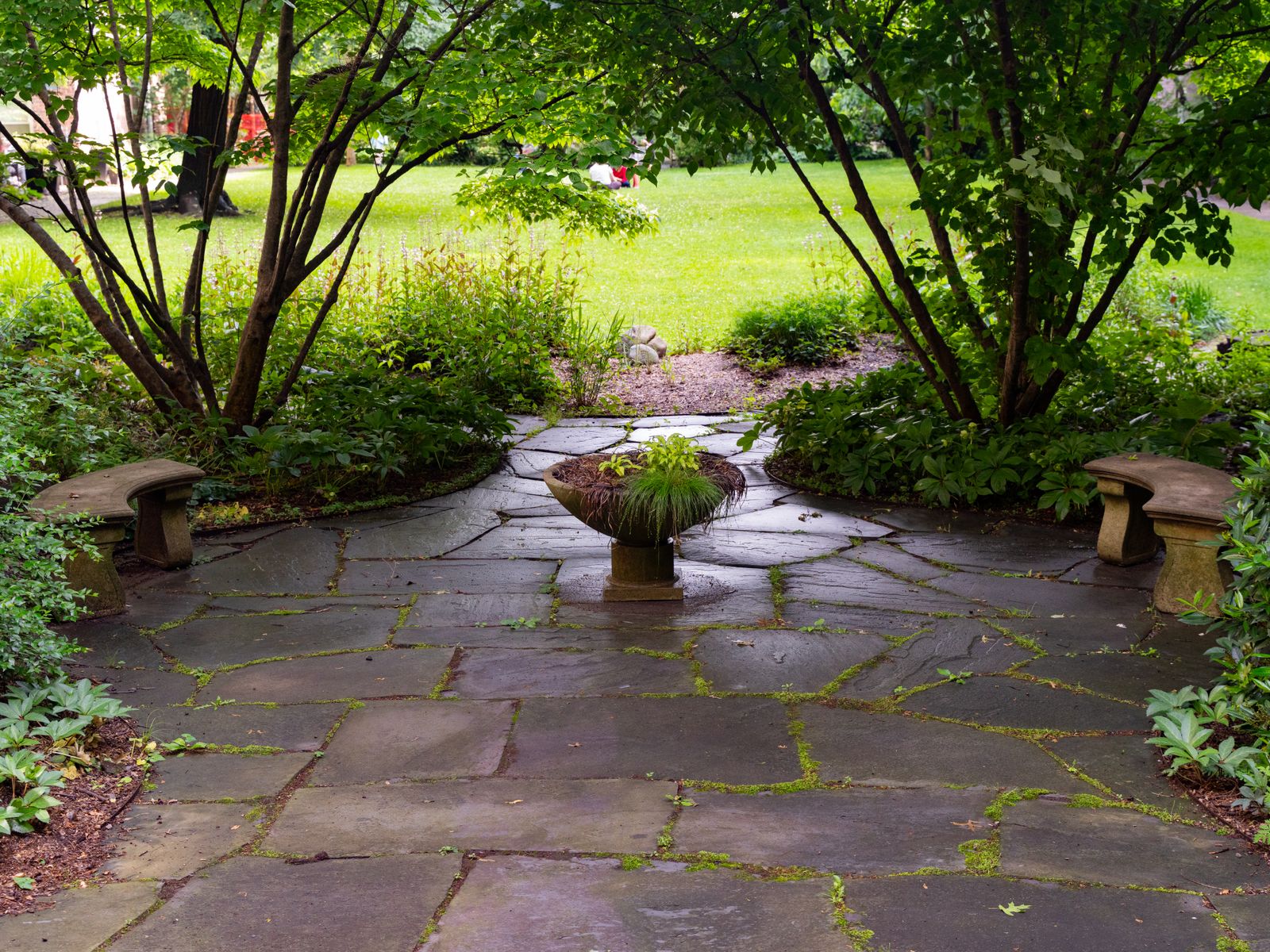
Pattern is the biggest visual decision you will make, and it usually costs little extra. Herringbone reads traditional and interlocks tightly. Running bond is simple and clean, and it visually stretches a smaller yard when the rows run away from the house. Ashlar patterns mix two or three paver sizes for a natural stone look that hides dirt and color variation well.
Large-Format Pavers for Newer Homes
Newer St. Johns County homes lean modern, and large-format pavers in the 12 by 24 inch range match that architecture. Fewer joint lines make a calmer surface, and the bigger units feel proportional next to tall sliders and open lanais. They demand a flatter, better-compacted base, so do not cut corners on prep.
Borders and Banding
A contrasting soldier-course border is the cheapest way to make a backyard paver patio look custom. A charcoal border around a sand-blend field, or the reverse, frames the space the way trim frames a wall.
Fire Pits, Seating Walls, and Outdoor Rooms
The best paver patio designs think in zones. A dining area near the back door, a lounge space a few steps away, and a fire pit at the far edge give one stretch of hardscape three jobs. Seating walls do double duty: they define those zones, seat a crowd, and hold planting beds.
Gas fire pits have largely replaced wood-burning here, partly for convenience and partly because some HOAs restrict open flames. If you are trenching a gas line anyway, price a full outdoor kitchen at the same time, since the utility runs are the expensive part. If the patio ties into a covered lanai, our custom patios and lanais page shows how to blend the two into one design.
What New-Construction Lots Need Underneath
Most newer subdivisions here sit on lots that were graded and filled during development, and that fill keeps settling for years. A patio built over loose fill settles with it. Proper paver patio installation means excavating past the soft material, compacting the sandy subgrade in lifts, and building a stone base thick enough to spread loads. Drainage matters just as much: the surface should slope away from the foundation, and downspouts should never dump onto the paver field, where washout can undermine the base.
Polymeric sand is the other quiet detail: it hardens in the joints and resists the weed growth and washout that plague regular sand in a climate this wet. Expect some efflorescence, a temporary white haze, on new pavers; it weathers off. Seal once the pavers have cured, then reseal every 2 to 3 years to keep colors rich and joints tight.
A Word on HOA Approval
Nearly every master-planned community in the county requires architectural review before hardscape goes in. Applications usually want a site plan, paver color and style, and sometimes a drainage note. It is a paperwork step, not an obstacle, and a contractor who works these neighborhoods weekly gets applications approved the first time.
Paver Patio Planning Checklist
- ✔ Pick a pattern and border that fit the house
- ✔ Zone the space for dining, lounging, and fire
- ✔ Confirm subgrade compaction is in the scope
- ✔ Slope the finished surface away from the home
- ✔ Specify polymeric sand in the joints
- ✔ Submit HOA paperwork before the dig date
Run through these six items before signing a contract and you will sidestep nearly every patio problem we get called to fix.
Frequently Asked Questions
How much does a paver patio cost in St. Johns County?
It depends on square footage, paver selection, pattern complexity, and extras like seating walls or a fire pit. Site access and how much base work the lot needs also move the number. The most reliable way to budget is an on-site estimate with options priced side by side.
Do I need HOA approval to build a paver patio?
In most St. Johns County master-planned communities, yes. Architectural review boards typically ask for a simple site plan plus the paver color and style before work begins. Approval can take a few weeks, so submit early. An experienced local contractor can prepare the drawings and product sheets for you.
What is the best paver pattern for a small backyard?
Running bond laid with the long lines pointing away from the house makes a small patio feel deeper, and large-format pavers reduce visual clutter from joints. Skip busy multi-size patterns in tight spaces. A single contrasting border adds a custom look without visually shrinking the field.
How thick should the base be under pavers in Florida sand?
Most Northeast Florida patios need several inches of compacted crushed stone over a compacted sandy subgrade, with more under anything carrying heavy loads. The exact depth depends on the soil on your lot. Compaction quality matters more than raw thickness, because loose fill is what causes settling.
How long does paver patio installation take?
A typical backyard patio takes roughly three to five working days once materials arrive: excavation and base work first, then laying the field and borders, then cutting, sanding, and cleanup. Projects with seating walls, fire pits, or difficult access run longer, and summer rain can stretch the schedule.
Should a new paver patio be sealed?
Yes, but not immediately. Let new pavers weather for a while so efflorescence can work its way out, then seal to deepen the color and protect against stains. In Northeast Florida’s rain and year-round humidity, plan to reseal every 2 to 3 years.
Get a Patio Design for Your Backyard
SIL Pavers is a local paver contractor serving St. Johns County, with recent patio work in RiverTown, Julington Creek Plantation, and the neighborhoods in between. We handle design, HOA paperwork, and installation, and estimates are free. Call us and let’s sketch out your backyard.