
A pool deck on Fleming Island works harder than almost any other surface at your home. It bakes in full sun, stays wet half the year, hosts barefoot traffic from March through October, and is expected to look good the whole time. Whether you are planning a new pool or replacing the tired deck around an original Fleming Island Plantation pool, these are the materials, layouts, and comfort details that come up on nearly every estimate we run.
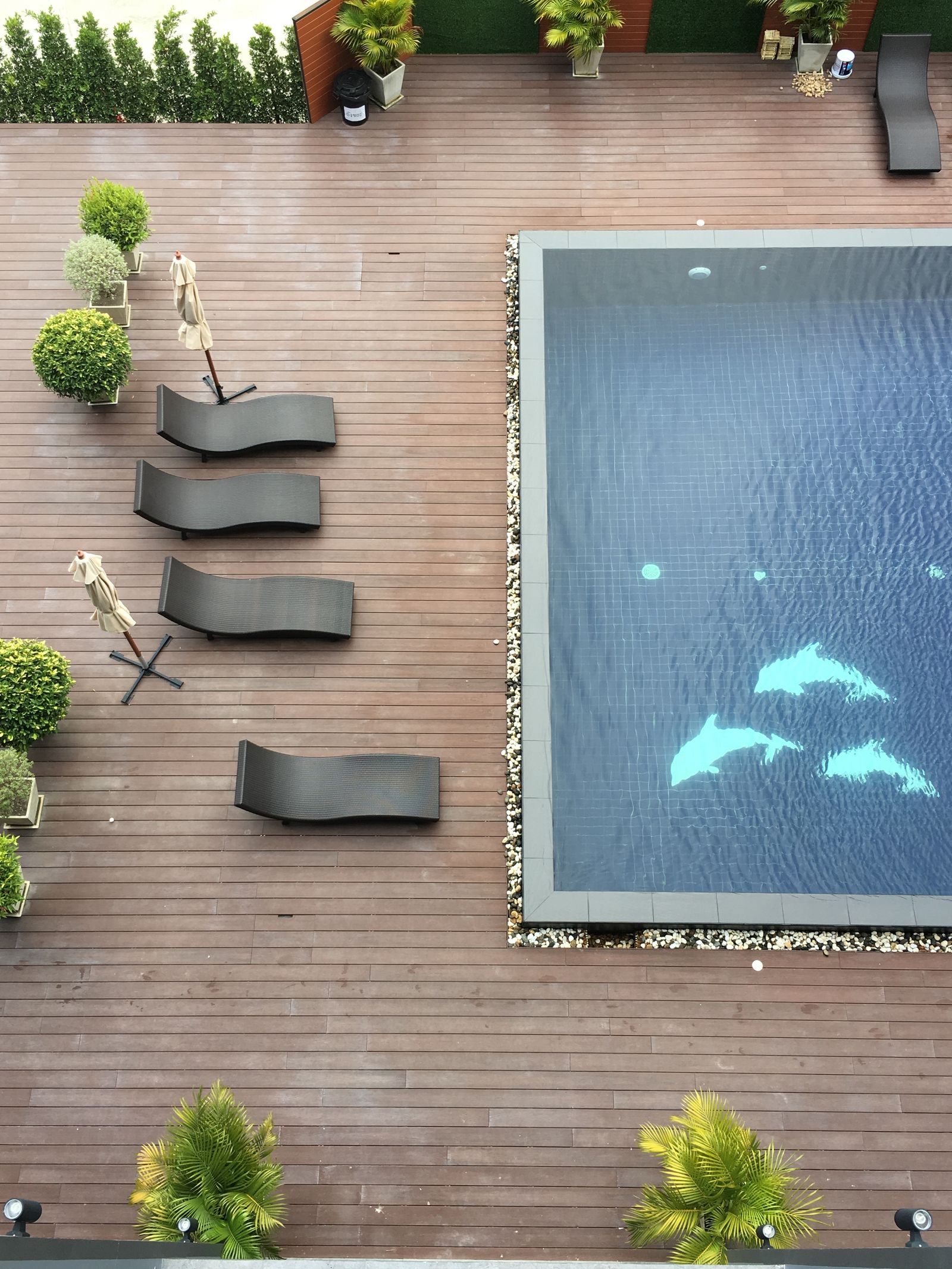
Materials That Work Around Florida Pools
Travertine and the Travertine Look
Travertine stays noticeably cooler underfoot than most surfaces, drains quickly through its natural pores, and delivers the resort look homeowners here ask for by name. If natural stone is outside the budget, porcelain pavers that mimic travertine give a similar appearance with consistent color and almost no maintenance, and tumbled concrete pavers in light, sandy blends get you most of the way there at a friendlier price.
Concrete Pavers
Interlocking pavers are the workhorse of pool deck remodels: dozens of colors and shapes, individual units that can be lifted and relaid if a pipe or sprinkler line ever needs attention, and joints that flex with our sandy soils instead of cracking the way a single monolithic slab can. Color matters more than pattern for comfort. A pale blend runs dramatically cooler in July sun than charcoal, and around a pool, that is the difference between walking and hopping.
Cool-Surface Options
If heat is your main complaint, ask about the cool-surface category as a whole: light-colored travertine, shell-toned pavers, and textured coatings engineered to reflect heat. No surface stays truly cold in August, but the gap between the best and worst choices is bigger than most people expect.
Layouts That Fit Fleming Island Backyards
Lots in Fleming Island Plantation are generous but not endless, and many pools live inside screen enclosures, so the layout has to earn its footprint. Widen the deck on the sunny side for loungers instead of ringing the pool with a uniform strip. Run the same paver from the covered lanai through the pool deck so the whole space reads as one room. Leave a real walkway behind the diving end, not a tightrope. And if the family lives outside all summer, a grilling nook a few steps off the deck keeps smoke away from swimmers; our outdoor kitchen projects often start exactly that way. For coping, bullnose travertine or a rounded paver edge stays comfortable on wet hands and the backs of legs.
Slip Resistance and Everyday Comfort
Wet feet and smooth surfaces are a bad pair, so choose texture first: tumbled finishes, shot-blasted pavers, or natural stone with honest grip. The deck should pitch away from the pool and the house so rinse water and rain leave quickly instead of ponding. Fleming Island’s year-round humidity grows mildew in the shaded corners of screen enclosures, and that film is slicker than the surface under it, so periodic cleaning is a safety habit, not just cosmetics. When the deck gets sealed, and every 2 to 3 years after, ask for a grip additive in the sealer so the finish never trades traction for shine. A full rundown of surface choices lives on our pool decks page.
Pool Deck Planning Checklist
- ✔ Pick a light color blend for barefoot comfort
- ✔ Choose a textured, slip-resistant finish
- ✔ Pitch the deck away from the pool and house
- ✔ Match pavers between lanai and deck
- ✔ Select a comfortable coping profile
- ✔ Plan sealing with a grip additive every 2 to 3 years
- ✔ Clear the design with your HOA before scheduling
Settle these seven decisions early and the rest of the project is just execution.
Frequently Asked Questions
What is the coolest pool deck surface for Florida sun?
Light-colored travertine is the standout for staying comfortable underfoot, followed closely by pale porcelain and light concrete paver blends. Color drives heat more than material alone, so a white or cream deck in any category beats a dark one. Shade structures help more than any surface choice.
Are pavers slippery around a pool?
Not when you choose the right finish. Tumbled and textured pavers grip well wet, and natural travertine has honest traction straight from the quarry. The risks are polished surfaces and glossy film-forming sealers. Ask for a slip-resistant additive whenever the deck is sealed and traction stays consistent.
Do I need HOA approval for a pool deck remodel in Fleming Island Plantation?
Generally yes for visible exterior changes, and it is always worth confirming before you schedule work. Reviews typically want the material, color, and footprint, and they move faster when the selections sit within the community’s usual palette. Your contractor should be able to prepare the submittal documents.
Can pavers be installed over an existing concrete pool deck?
Often, yes. If the slab is sound and the added height works at door thresholds and coping, thin pavers can go over the existing deck and skip demolition entirely. If the slab has settled or drainage is wrong, removal and a new compacted base is the better spend.
How do you keep a pool deck from staining and mildew?
Rinse regularly, clean the shaded enclosure corners where mildew starts, and keep the surface sealed on a 2 to 3 year cycle so organics sit on the sealer instead of soaking into the paver. Address sprinkler overspray too, since irrigation water is behind many rust-colored stains.
How long does a pool deck installation take?
A typical remodel runs about one to two weeks depending on demolition, square footage, and coping work. Weather adds a variable, since base preparation needs dry conditions to compact properly. The pool usually stays usable for most of the project except during coping replacement.
Let’s Design Your Pool Deck
SIL Pavers builds and remodels pool decks throughout Fleming Island Plantation and nearby communities, including Pace Island and Orange Park. Estimates are free, samples come to you, and we will talk honestly about which surface fits your budget and your bare feet. Call us before the next swim season starts.