
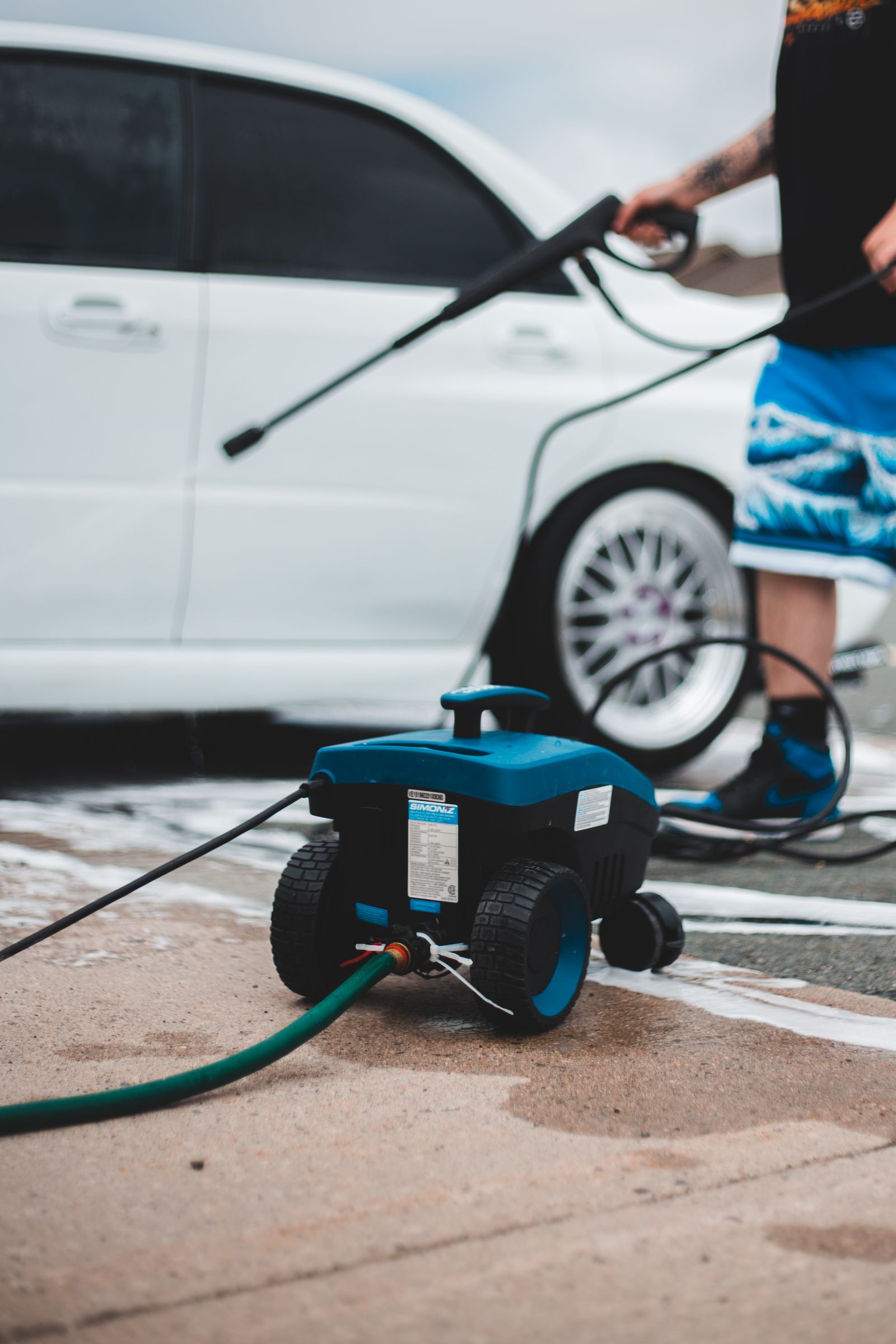
Pool deck pressure washing in Jacksonville is one of those jobs that looks simple until it goes wrong. Our humidity feeds mildew and algae by early summer, and by July plenty of homeowners are staring at a rental pressure washer wondering if they should handle it themselves. Sometimes the answer is yes. This post lays out honestly when DIY makes sense, where it damages decks, and why what happens after the wash matters more than the wash itself.
Why Jacksonville Pool Decks Get Dirty So Fast
Year-round humidity and heavy summer rain keep pool decks wet long enough for mildew, algae, and lichen to establish, especially on shaded sections and anywhere sprinkler overspray lands. Tannin stains from oaks and sunscreen residue around loungers pile on top. It is simply what North Florida weather does to anything horizontal.
When DIY Pressure Washing Is Fine
If you have a broom-finished concrete deck in decent shape, a light annual wash is a reasonable homeowner job. Use a wide fan tip, keep the wand moving at a consistent distance, and work with a mild cleaner instead of leaning on raw pressure. Rinsing off pollen, light dirt, and fresh mildew before it roots deep is genuinely useful, and it is hard to hurt a sound slab with modest pressure and a careful technique.
DIY is also fine for small touch-ups between professional cleanings, like rinsing the shaded strip along the screen enclosure that greens up every spring.
Where DIY Power Washing Damages Decks
Etching Pavers and Soft Surfaces
A zero-degree or narrow tip held close will carve wand lines into concrete pavers, eat the cream off a slab, and permanently scar travertine and other soft stone. Etching is not fixable with another wash. Once the dense surface layer is cut open, the paver face is rougher, holds dirt faster, and ages worse. Most of the damaged pool decks we get called to evaluate were hurt by pressure, not neglect.
Blasting Sand Out of the Joints
Paver joints are filled with polymeric sand, and that sand is structural. It locks the field together, keeps weeds and ants out, and holds the bedding layer in place. Aggressive washing blows joints empty in seconds. Left unfilled through a Jacksonville rainy season, open joints let water scour the sand bed, and that is how you get rocking and settled pavers over our sandy soils. Every real paver cleaning ends with joints re-sanded, which most DIY jobs skip.
Streaking and Patchy Results
Inconsistent distance and overlap leave zebra striping that only shows up after the deck dries. On sealed surfaces, high pressure can also blotch or strip the sealer unevenly. Professional pool deck cleaning relies on surface cleaners and measured pressure to avoid this.
Sealing After Washing Is the Step That Pays
Washing removes the growth; sealing is what slows it from coming back. A freshly cleaned, fully dried deck takes sealer well, and a quality sealer resists stains, deepens color, and makes the next cleaning dramatically easier. In our climate, plan on a professional wash and seal every 2-3 years, with quick rinses in between. On pavers, that visit should include fresh polymeric sand before the sealer goes down, so the joints are locked and protected in the same pass.
DIY or Pro? A Quick Checklist
- ✔ Broom-finished concrete, light dirt only: DIY is fine
- ✔ Pavers, travertine, or any decorative finish: hire it out
- ✔ Black mildew or lichen that returns fast: hire it out
- ✔ Joints losing sand or weeds sprouting: pro clean plus re-sanding
- ✔ Water no longer beading on the surface: time to wash and reseal
- ✔ Deck due for its 2-3 year service: bundle cleaning and sealing
When more than one line points to a pro, the money saved renting a machine usually is not worth what an etched deck costs to fix.
Frequently Asked Questions
How much psi is safe for pressure washing a pool deck?
Stay under roughly 1,500-2,000 psi with a wide fan tip for concrete, and lower for pavers or natural stone. Distance and technique matter as much as the number. Professionals typically use surface cleaners and detergents so the chemistry does the work instead of raw pressure.
Will pressure washing remove sand from my paver joints?
Aggressive or close-range washing will, and empty joints invite weeds, ants, and washout of the bedding sand beneath the pavers. A proper paver cleaning finishes with new polymeric sand swept in and set, restoring the interlock. If your joints are already low, schedule re-sanding with the wash.
How often should a Jacksonville pool deck be pressure washed?
Most decks here need a real cleaning every 1-2 years, with light rinses in between, because humidity and shade regrow mildew quickly. Pair the deep clean with resealing every 2-3 years. Decks under heavy oak canopy or beside lagoons often sit at the short end of those ranges.
Should a pool deck be sealed after pressure washing?
Yes, whenever the old sealer has worn away. Washing opens the surface, so it absorbs sealer well once fully dry. Sealing slows mildew regrowth, resists stains, and protects polymeric sand joints on pavers. Skipping it means the deck gets dirty faster and the cleaning cycle shortens.
Can pressure washing damage travertine around a pool?
Easily. Travertine is a soft, porous stone, and narrow tips or close passes carve permanent wand marks into it. It should be cleaned with low pressure, appropriate cleaners, and a wide pattern, then protected with a penetrating sealer. Travertine is the last surface to experiment on.
Is professional pool deck cleaning worth the cost?
For pavers, stone, and decorative finishes, usually yes. A pro visit includes correct pressure, mildew treatment, joint re-sanding, and sealing in one pass, which protects the deck instead of just brightening it. For plain broom-finished concrete in good shape, a careful DIY wash is perfectly reasonable.
Get Your Deck Cleaned, Sanded, and Sealed Right
If your deck is green in the corners or the color has gone flat, it is due. SIL Pavers handles pressure washing, re-sanding, and sealing for pool decks across Jacksonville, from Mandarin down through St. Johns and the rest of our Northeast Florida service areas. Call for a free estimate and we will tell you straight whether your deck needs a full service or just a rinse you can do yourself.