
Stone paver installation in Jacksonville looks deceptively simple from the curb: dig a little, spread some sand, set the pavers, done. The truth is that everything deciding whether your patio or driveway lasts five years or thirty happens below the surface, before a single paver is placed. This guide walks through the full installation process step by step, in the order a professional crew runs it, so you know exactly what you are paying for and what corners a cheap bid plans to cut.
Step 1: Site Prep and Layout
A good job starts with string lines, paint, and utility locates, not a shovel. The crew marks the footprint, confirms final heights against door thresholds and garage slabs, and plans the slope. In Jacksonville, that slope is everything: the finished surface needs to fall away from the house, typically about a quarter inch per foot, so our summer downpours run off instead of ponding against the foundation.
Step 2: Excavation and Base Compaction in Sandy Soil
Northeast Florida’s sandy soil drains beautifully and shifts easily, which makes compaction the most important hour of the whole project. The crew excavates down far enough for base material plus bedding plus paver thickness, then compacts the native subgrade before anything goes in the hole. Crushed stone base goes in next, spread and compacted in thin lifts rather than dumped and packed once. A patio might carry four inches of base; a paver driveway carrying vehicles needs substantially more.
Why Compaction Is Where Cheap Bids Fail
Skipped lifts and a quick pass with a plate compactor look identical to proper work on installation day. The difference shows up in year two as ruts and birdbaths. When a low bid comes in far under the others, thin base and rushed compaction are almost always where the savings live. Washout from heavy rain, not traffic, is what kills underbuilt hardscape here.
Step 3: Screeding and Laying the Field
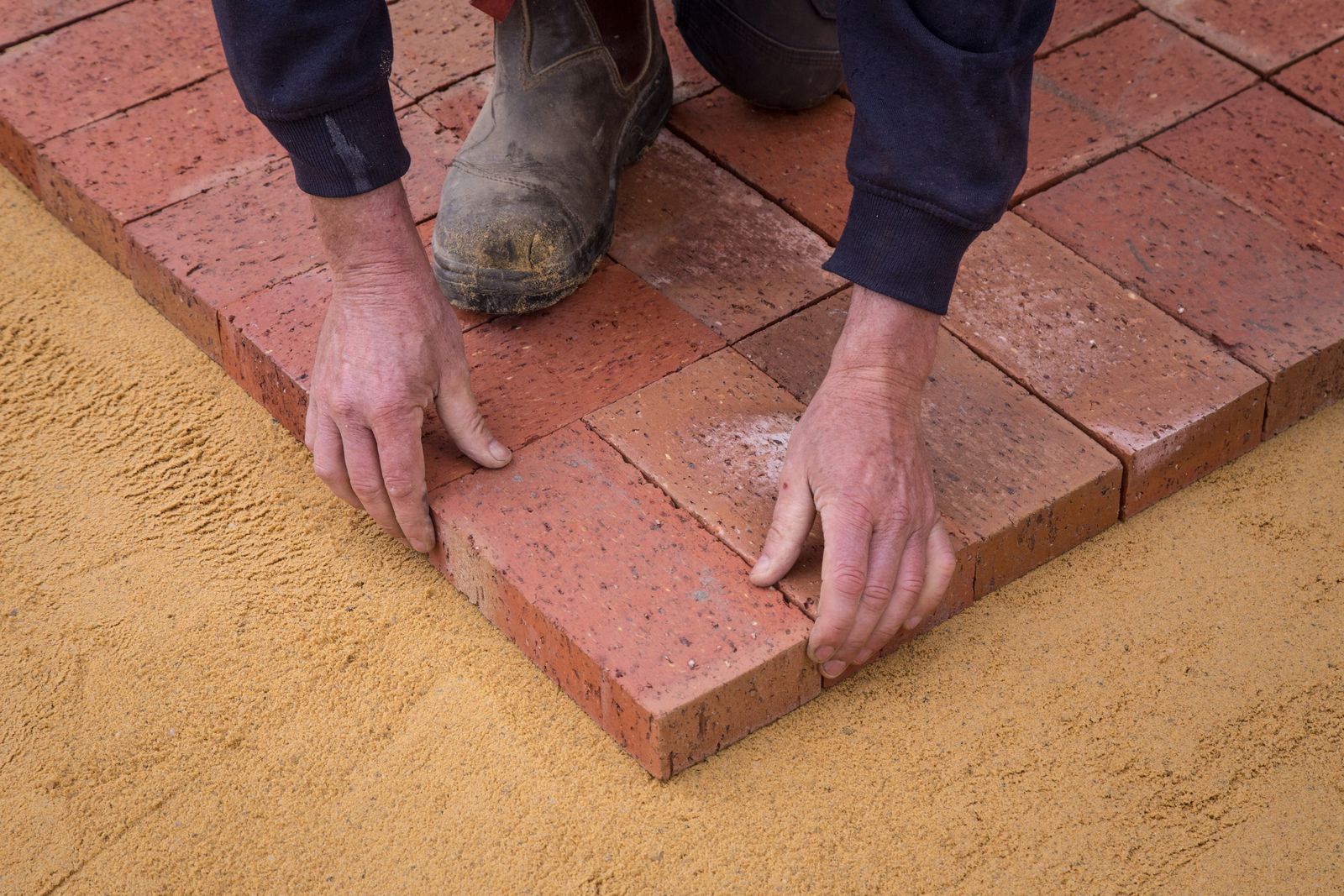
With the base compacted and true, the crew screeds an inch of bedding sand across it, pulled flat with pipes and a straightedge. Pavers are then laid in the chosen pattern, placed rather than pushed, working from multiple pallets so color variations blend instead of banding. This is the fast, satisfying part of installing stone pavers; the craft was in everything underneath.
Step 4: Cutting, Edging, and Locking It All In
Cuts and Borders
Edges, curves, and borders get cut with a wet saw for tight, clean joints. Sloppy cutting is the most visible tell of an inexperienced crew: look at the borders on any finished job they show you.
Edge Restraints
Concrete or spiked edge restraint goes around every unconfined side. Pavers are a flexible system, and without restraint the field slowly spreads, joints open, and the edges roll. Missing edge restraint is the number one defect we find when asked to repair another installer’s hardscape installation.
Polymeric Sand and Sealing
The field gets compacted again to seat the pavers into the bedding, then polymeric sand is swept into the joints, compacted, and activated with water so it hardens against washout, weeds, and ants. Sealing comes last, and often on a separate visit after new-paver efflorescence, the temporary white mineral haze, has weathered out. In our humidity, plan to reseal every 2-3 years; a good wash and seal visit keeps the color deep and the joints protected.
What a Good Crew Does Differently: A Checklist
- ✔ Confirms slope drains water away from the house
- ✔ Compacts base in thin lifts, not one thick dump
- ✔ Sizes base depth to the load, deeper for driveways
- ✔ Pulls from multiple pallets to blend paver color
- ✔ Installs edge restraint on every open side
- ✔ Finishes with compacted, water-activated polymeric sand
Ask any bidder to walk you through these six items. The ones who answer in specifics are the ones whose work you want on your property.
Frequently Asked Questions
How long does stone paver installation take?
A typical Jacksonville patio takes two to four days from excavation to polymeric sand, and a full driveway roughly three to five, weather permitting. Sealing often happens on a later visit after the surface weathers. Complex patterns, steps, and seating walls add time; rain days add more.
How deep should the base be under pavers in Florida?
For our sandy soils, plan on roughly four inches of compacted crushed stone under patios and walkways and six to ten inches under driveways, always compacted in thin lifts. The bedding sand above it stays around one inch. Load determines depth, which is why driveway bids should never match patio bids.
Do pavers need edge restraints?
Yes, on every side not already confined by a slab, wall, or foundation. Pavers interlock as a flexible system, and edge restraint is what holds that system tight. Without it the field spreads, joints widen, and edge rows tip outward, usually within a couple of rainy seasons.
What is polymeric sand and why does it matter?
Polymeric sand is joint sand blended with binders that harden after water activation. It locks pavers together, resists washout in heavy rain, and blocks weeds and ants far better than plain sand. In Jacksonville’s storm-heavy summers it is the difference between stable joints and constant re-sanding.
Should new pavers be sealed right away?
Usually not immediately. New concrete pavers often show efflorescence, a white mineral haze, during their first months, and sealing too soon can trap it under the coating. Most installers recommend letting the surface weather, cleaning it, then sealing, and resealing every 2-3 years afterward.
Can I install pavers myself in Jacksonville?
A small, ground-level walkway is a realistic DIY weekend project if you rent a plate compactor and respect the base work. Driveways, pool decks, and anything with drainage implications belong with a professional crew, because base and slope mistakes in our soil are expensive to redo.
Get It Built Right the First Time
The best paver installation process is boring: methodical prep, honest compaction, clean cuts, and locked edges, repeated on every job. SIL Pavers brings that process to patios, driveways, and pool decks across Jacksonville and Northeast Florida, from Mandarin to Nocatee and Ponte Vedra. Browse our services and call for a free on-site estimate; we are glad to explain exactly what your project needs under the surface.