
Concrete resurfacing gives a worn driveway or patio a new wearing surface without the cost and disruption of a full tear-out, and for many Green Cove Springs homes it is the right call. The honest answer, though, is that resurfacing only works when the slab underneath is still structurally sound. This guide walks through the resurfacing vs concrete replacement decision: how to tell which side of that line your concrete is on, what resurfacing involves, and when replacement is the smarter spend.
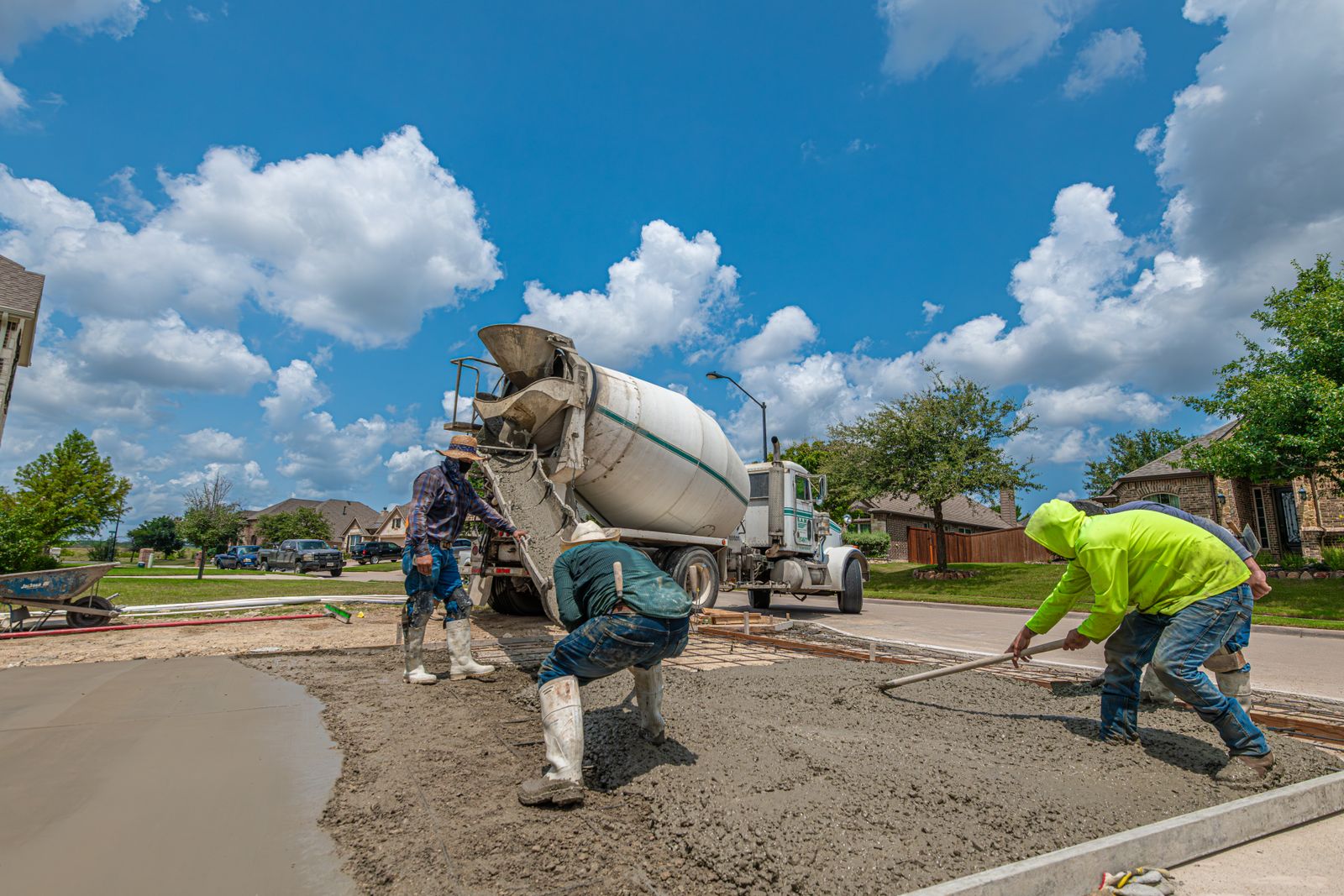
What Concrete Resurfacing Actually Is
Resurfacing applies a new layer of polymer-modified concrete overlay, typically an eighth of an inch to half an inch thick, over your existing slab. The old surface is pressure washed, cracks are filled, and the overlay is troweled or sprayed on, then finished in your choice of texture or color. The result looks and wears like new concrete because the surface you touch and see is new.
What resurfacing is not: a structural repair. Because the overlay bonds to the existing slab, any movement underneath transfers directly into the new surface. The overlay does not stop cracks. It mirrors them, usually within a season or two. That is why the slab inspection matters more than the product going on top.
When Resurfacing Works for Green Cove Springs Homes
Resurfacing is a strong option when the damage is cosmetic. That means surface spalling and pitting, hairline cracks that do not shift when you drive over them, faded or stained concrete, and old surfaces that have simply gone dull with decades of Florida sun and rain. The same logic applies to resurfacing a concrete patio: if the slab under your patio or lanai is sound, an overlay can transform it.
Many older driveways and patios throughout Green Cove Springs have structurally sound slabs with surface wear from decades of Florida heat, rainfall, and everyday use, making them excellent candidates for resurfacing. From the established streets near Spring Park out toward Governors Creek, the hard settling work is done and the base has proven itself. And because Green Cove Springs receives frequent heavy rain and stays humid most of the year, moisture management and drainage play a much larger role in concrete longevity here than the cold-weather cracking northern homeowners deal with.
Signs Your Slab Qualifies
The slab sits level with no sections tilting or sinking. Cracks are narrow and stable rather than widening year over year. Water drains off the surface instead of pooling in low spots. Edges are intact rather than crumbling.
Check the expansion joints too. Healthy joints that remain intact let the slab move as designed. Missing or deteriorated joints often allow random cracking that resurfacing cannot permanently hide, which is why joints are the first thing a concrete contractor looks at on an estimate.
Before Choosing Concrete Resurfacing: A 5-Point Checklist
- ✔ Surface damage only (spalling, pitting, discoloration)
- ✔ Cracks are stable, not growing
- ✔ No sinking sections or lifted corners
- ✔ Water drains away from the slab and the house
- ✔ Expansion joints are intact
If you answer yes to all five, resurfacing is likely worth discussing. Any no means start with concrete repair or a replacement estimate instead.
When Replacement Is the Better Spend
Some slabs are past saving, and covering them with an overlay wastes money. Replacement is the right call when sections have settled unevenly, when cracks are wide, deep, or actively growing, when the surface has already been patched repeatedly, or when the slab has been lifted from below. Drainage problems matter too: if water runs toward the house or pools against the foundation, the fix is regrading and repouring, not resurfacing over the problem.
In Northeast Florida, slab movement is rarely about the freeze-thaw cycles northern states deal with. It is usually sandy soils, poor compaction under the original pour, or drainage washout undermining the base, with tree roots close behind. Fixing those means addressing the base itself, which is replacement territory: a new compacted subgrade and a fresh pour through a proper concrete driveway installation.
A quick test: place a straightedge or level across the crack. If one side sits noticeably higher than the other, the slab has moved, and moved slabs keep moving.
The Resurfacing Process, Step by Step
1. Inspection and Honest Assessment
A contractor worth hiring checks the slab before quoting an overlay. We look at crack patterns, joint condition, and drainage, and we check for movement. If your concrete needs replacement, you should hear that at the estimate, not after the overlay fails.
2. Surface Preparation
Pressure washing removes dirt, mildew, and any old sealer. Cracks and spalled areas get filled and ground flush. Preparation is most of what separates an overlay that lasts from one that peels.
3. Application and Finish
The overlay goes on in the texture and color you have chosen, from a clean broom finish to a decorative concrete overlay that mimics stone, tile, or stamped concrete. Most residential driveways are walkable the next day and drivable within a few days, depending on weather.
4. Sealing
A quality sealer protects the new surface from moisture, stains, and Florida’s UV. Plan to reseal every 2-3 years, the same maintenance rhythm we recommend for concrete and pavers throughout Clay County.
Resurfacing vs. Replacement at a Glance
Concrete driveway resurfacing costs a fraction of replacement, finishes in days rather than a week or more, and produces no demolition debris. Replacement costs more up front but resets the clock completely: new base, new slab, new decades of service. The deciding factor is not budget preference; it is the condition of the slab. Sound slab, resurface. Failing slab, replace.
Frequently Asked Questions
How long does concrete resurfacing last in Green Cove Springs?
A properly applied overlay on a sound slab typically lasts 10-15 years in Northeast Florida when resealed every 2-3 years. The lifespan depends almost entirely on the condition of the slab underneath and the quality of surface preparation.
Can you resurface a driveway with large cracks?
Resurfacing a concrete driveway with wide or moving cracks rarely holds. They telegraph through the overlay, usually within the first year. Narrow, stable cracks can be filled and covered successfully. If a crack has visible height difference across it, the slab has shifted and resurfacing is not the answer.
Is concrete resurfacing cheaper than replacement?
Yes. Because the existing slab stays in place, resurfacing typically costs substantially less than demolishing and pouring new concrete. It is only cost-effective, though, when the slab is structurally sound. Overlaying a failing slab means paying twice.
Can decorative finishes be added during resurfacing?
Yes. Many overlays can be finished with textures, patterns, borders, or integral color to resemble stone, tile, or stamped concrete while keeping the existing slab. Ask to see finish samples at the estimate.
How soon can I use my resurfaced driveway?
Foot traffic is typically fine after 24 hours and vehicles within 2-3 days, weather depending. Summer humidity in Clay County can stretch cure times slightly, so we confirm timing on-site at the estimate.
Do you also resurface pool decks and patios?
Yes. Pool decks around Green Cove Springs are frequent resurfacing projects, and overlays can add slip-resistant texture that bare troweled concrete never had. The same slab-condition rules apply.
Get a Straight Answer on Your Concrete
If your driveway or patio looks tired, the first step is finding out what is actually wrong with it. SIL Pavers serves Green Cove Springs and all of Clay County, including Orange Park and Fleming Island, plus the full list of service areas across Northeast Florida, with free on-site estimates and an honest resurface-or-replace recommendation. Call us before you pay for a tear-out you might not need.